Most people don't think twice about slipper linings. You see something that looks fluffy. The price seems reasonable, and you buy it. Fair enough! After all, it's a slipper, not a mortgage.
But then week three happens. The lining's gone flat, and your feet feel weirdly warm and a bit damp. The slippers that felt great out of the box now feel like slightly cushioned cardboard. At that point, the price starts looking less reasonable.
Nine times out of ten, that's a synthetic lining problem!
So What's the Actual Difference?
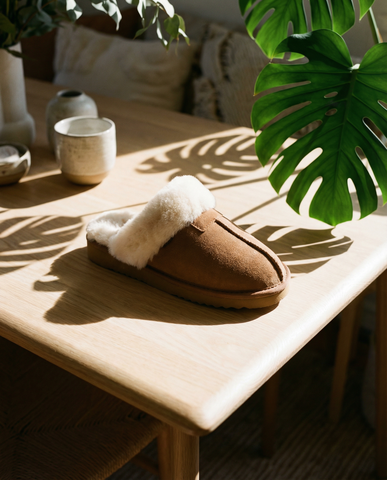
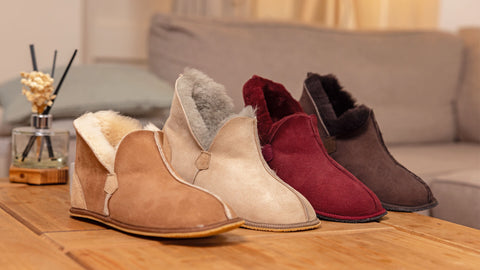
Real sheepskin, shearling, if you want the technical name, is wool still attached to the hide. One material, nothing bonded or layered together. It's been used in footwear for a very long time, which should tell you something.
Synthetic lining is polyester or acrylic made to look like wool. And honestly, it does a decent job. On a shelf, side by side, most people couldn't pick them apart. The difference shows up when you wear them. You know it specifically, in how they feel after a few weeks rather than a few days.

Why Sheepskin Handles Temperature Better
There is a thing about sheepskin that nobody really explains. It doesn't just keep your feet warm; it keeps them at a reasonable temperature. The wool fibres trap heat when you're cold. Then, release it when your feet start overheating. It does this on its own without any input from you.
Synthetic lining just... insulates. Heat goes in, heat stays in. Not something you would prefer, right?
The Sweating Thing (Yes, Really)
Feet sweat. Even just pottering around the house, they sweat more than most people assume. What happens to that moisture is where sheepskin and synthetic lining go in completely different directions.
Sheepskin absorbs it and releases it as the material breathes. The inside stays dry. You can wear them for hours, and they don't feel clammy. But synthetic lining holds the moisture in. It sits there. Who would prefer that?
Sheepskin also contains lanolin naturally. This has mild antibacterial properties. It's not magic, but it does mean sheepskin slippers stay fresher for longer compared to synthetic ones, getting the same daily use.
The First Week Is Misleading
Synthetic slippers are genuinely good on day one. They tick all the boxes, like soft, fluffy, and comfortable. They make a strong first impression. The problem is that the first impression is also peak performance.
The fibres compress with wear, and they don't bounce back. A few weeks in, the lining is noticeably flatter. A few months in, and you're essentially walking on a thin layer of matted fibre. At that point, you will most likely be wondering what happened to the slipper you bought.
Sheepskin compresses too, but differently. It moulds to your foot rather than just collapsing. Most people find that their sheepskin slippers feel better at six months than they did when new. This is simply because they've shaped themselves to fit. That's not something any synthetic lining does.
The Price Argument, Honestly
Sheepskin slippers cost more. That's just true, and there's no point pretending otherwise. But synthetic slippers tend to need replacing every twelve months or so with daily wear, sometimes sooner. A decent pair of sheepskin womens slippers can last several years. There is a small condition that it has to be looked after reasonably well. Now you do the maths. A quality product that lasts over three or four years, versus the cheaper option that usually ends up costing more. So, you've just been paying in smaller, more frequent instalments.
Also worth knowing: sheepskin is a natural material and biodegrades. Synthetic lining is plastic-based and doesn't. If that matters to how you shop, it's a relevant difference.
The Bottom Line
Synthetic slippers are good at looking like the right choice. Real sheepskin is better at actually being the right choice. They are warmer without overheating, drier, and longer lasting. They are genuinely more comfortable the longer you wear them.
The slippers that still feel good a year in are almost always the sheepskin ones. The ones you've quietly replaced twice by then are almost always not. Want to make sure you're buying the real thing? Read our complete guide on how to know if your shearling slippers are genuine before making your purchase.